


[The History of Overcoats #1] The Symbol of British Elegance: The Roots of the Chesterfield and the Ulster
**The Birth of the Overcoat: Wearing 'Status' and 'Formality'
— The Chesterfield and the Ulster —**
An overcoat thrown on during the chilly seasons. Today, it is primarily viewed as a fashion item, but unravelling its history reveals that in 19th-century British upper-class society, it functioned as an essential part of the 'dress code.'
At the time, gentlemen were required to wear an overcoat worthy of their formal attire—such as a frock coat or tailcoat—to match its level of 'dignity and status.' It was far more than a mere measure against the cold; it was an indispensable item for demonstrating one's social standing and refinement.
Today, we introduce two masterpiece styles that carry the elegance of those 19th-century British gentlemen straight into the modern day. Let us trace the roots of the ultimate formal Chesterfield coat and the heavy-duty Ulster coat, originally born to accompany travelers on their journeys.
**The Chesterfield Coat: The Secret Behind the 'Most Formal Coat' Loved by an Earl
The Legacy Left to the Fashion World by an Earl**
The Chesterfield coat is said to hold the 'most formal status' among all coats known today. It derives its name from the 6th Earl of Chesterfield, a prominent figure in mid-19th-century Britain. As a leading fashion icon of his era, his elegant attire and innovative sense of style were constantly the center of attention in high society.
The coat favored by the Earl was originally conceived to be worn over formal attire such as a frock coat or tailcoat. Consequently, the philosophy of 'how to make it look as beautiful and dressy as possible' was thoroughly pursued, resulting in a sophisticated, minimalist design stripped of all unnecessary ornamentation.
**The 'Lapel' Structure Shared with Formalwear**
The high prestige possessed by the Chesterfield coat lies in the secret of its collar.
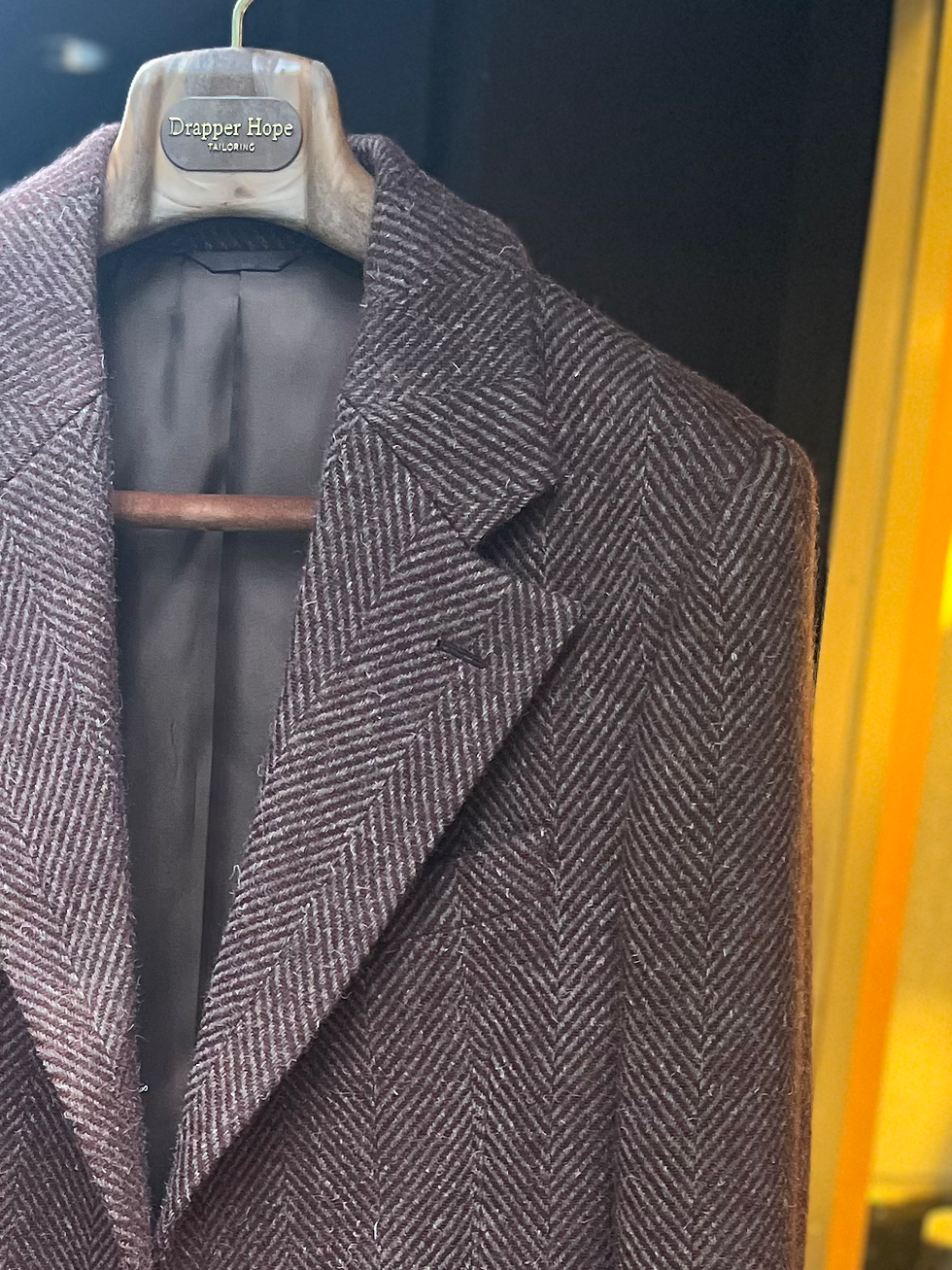
Much like a standard suit or jacket, this coat features a notched lapel, where the lower collar notches into the upper collar. This structure is identical to that of a tailored jacket, demonstrating a high affinity with formalwear and imparting a refined, formal impression.
Furthermore, a fly front (hidden placket) is frequently employed to conceal the front buttons beneath the fabric, simplifying the design to its utmost limit and emphasizing a more graceful, sophisticated silhouette. The slim, straight 'I-line' silhouette that follows the body's natural lines is also a deliberate design choice meant to make the wearer look exceptionally smart.

**The Ulster Coat: 'Heavy Elegance' for the Traveller
The Birth of the Travel Coat in the Age of Railway Travel**
In contrast, the Ulster coat developed for a different purpose than the Chesterfield—primarily as a travel coat meant for long-distance journeys and movement. In the late 19th century, the expansion of steam locomotives popularized railway travel, leading the wealthy class to move about frequently. However, the passenger cars of that era suffered from severe drafts and bitter cold.
This drew attention to coats made of thick woolen fabrics, originally crafted in the harsh climate of Ulster, Northern Ireland. Incorporating this fabric and a design capable of withstanding the rigors of travel became the roots of the Ulster coat.
**Details Balancing Cold Protection and a Heavy, Majestic Presence**
The hallmark of the Ulster coat lies in its heavy, substantial feel and the thoughtful features designed to cope with harsh travel conditions.
The collar features a double-layered lapel style known as an 'Ulster collar,' where the upper and lower collars share roughly the same width. When popped upward, it firmly covers the neck area, offering exceptional cold-weather protection. Its double-breasted front closure further enhances its weighty presence and warmth.
Additionally, to prevent the coat from losing its shape while travelling, a back belt is invariably positioned at the waist to cinch the loose silhouette and distribute the weight of the coat. In its earlier iterations, some versions even included hoods or capes to shield the wearer from wind and rain, testifying to the fact that this coat was truly a 'practical travelling companion.'


**Knowing History Changes How You Dress**
The Chesterfield coat pursued 'formality' in order to be worn over formal attire. Meanwhile, the Ulster coat pursued 'heavy-duty practicality' to withstand the rigors of travel.
Both were born out of the daily lives of 19th-century British gentlemen, and their designs carry undeniable, purposeful reasons. Simply knowing these roots transforms your mindset when wearing an overcoat, naturally elevating your styling to something far more elegant.
At our salon, in addition to the Chesterfield and the Ulster, you can have raglan coats, balmacaan (balcollar) coats, and pea coats custom-tailored.
By committing to a precise, flawless fit, your coat becomes a lifelong symbol of distinction and dignity.
Why not leverage this knowledge and have a piece tailored specifically to your physique?

![[The History of Overcoats #2] The Challenge of Rain and Mobility: The Functional Beauty of the Trench, Balcollar, and Raglan](https://static.wixstatic.com/media/778610_3e1f145a5ac24032beafb88633835f31~mv2.jpg/v1/fill/w_980,h_653,al_c,q_85,usm_0.66_1.00_0.01,enc_avif,quality_auto/778610_3e1f145a5ac24032beafb88633835f31~mv2.jpg)


Comments